
For years, the unstated deal between vacationers and the Caribbean was easy: You pay double (or triple) the value to go to in January, and in change, you get excellent, pristine, electric-blue water. You pay the premium to keep away from seaweed.
That deal simply obtained damaged.
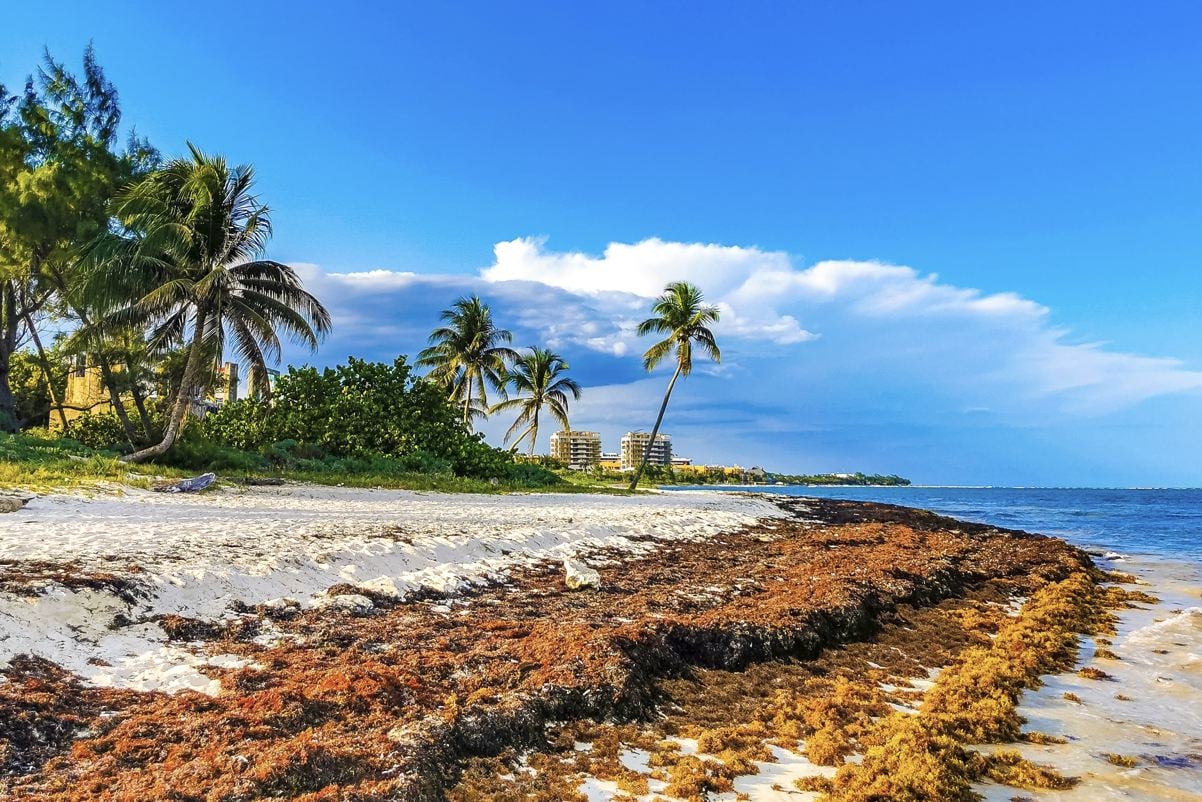
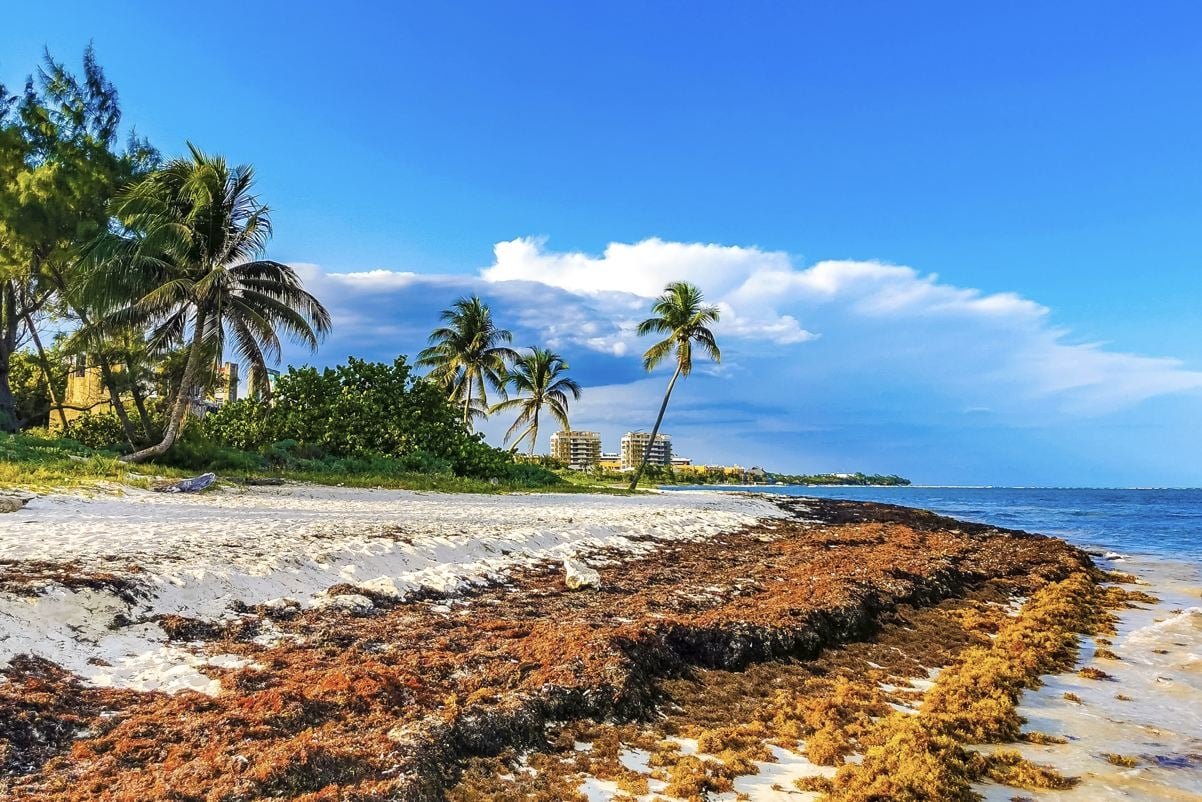
In a uncommon and alarming climate anomaly, a large invasion of Sargassum has slammed into the Mexican Caribbean this week, shattering the parable that winter is the “protected season.”
In case you are heading to the Riviera Maya considering you paid for assured crystal-clear water, you could possibly be in for a shock this winter.
The “Inconceivable” January Surge
Normally, Sargassum—the smelly, brown macro-algae that plagues tropical seashores—is a summer season drawback. It ramps up in April and dies off by October. January is meant to be the “Holy Grail” of clear water.
Not this 12 months.

On Thursday, January 8, a shockwave hit Playa del Carmen. In a matter of hours, a large “atypical surge” dumped roughly 25 tons of seaweed onto Playa Mamitas, essentially the most well-known get together seaside in Playa del Carmen.
This wasn’t only a few stray strands washing up on the sand. This was a 25-ton blanket of brown sludge that required heavy equipment and emergency cleanup crews (Zofemat) to deal with.
Reviews from Tulum on the identical day confirmed recent arrivals hitting the shoreline there as properly. Whereas Cancun is at the moment going through “reasonable” ranges, the currents are pushing these large mats northward, placing the complete Resort Zone on excessive alert.
This Is not A Rumor: Verify The Reside Webcam Under
See the unfiltered actuality for your self on this stay feed from Playa del Carmen.
Punta Cana On Alert
In case you are studying this from the Dominican Republic considering, “Glad I am not in Mexico,” assume once more.
Whereas the bodily mountains of seaweed hit Mexico first this week, Punta Cana is formally on “Excessive Alert.”
- The Scenario: An enormous sargassum mat has been detected within the Central Atlantic, shifting westward towards the Dominican Republic.
- The Danger: Punta Cana’s hottest seashores (Bavaro, Cabeza de Toro) face East, that means they catch all the pieces the Atlantic throws at them. The forecast for 2026 warns of “main blooms” arriving months sooner than typical.
- The Verdict: Whilst you may not see 25 tons at present, the “protected window” of January is quickly closing. The very same mass of algae hitting Mexico is successfully knocking on Punta Cana’s door proper now.

What Is This Brown Stuff? (A Fast Refresher)
In case you are new to the Caribbean, you may be considering, “It is simply seaweed, proper?”
Incorrect. This is not the lovable little inexperienced kelp you see in California.
Sargassum is a floating brown algae that travels in large island-sized mats throughout the Atlantic. Out within the open ocean, it’s truly an important habitat for sea turtles and fish. However when it hits the shore, it turns into a nightmare.
- The Scent: As quickly because it lands and begins to rot within the solar, it releases hydrogen sulfide. That’s the identical gasoline that smells like rotten eggs. It ruins the breeze, ruins your urge for food, and might even tarnish silver jewellery.
- The Bugs: The rotting piles entice sea lice and sand fleas. Strolling by it is not simply gross; it’s itchy.
- The Water: It turns that well-known turquoise water right into a murky, tea-brown soup referred to as “Sargassum Brown Tide.”

Why This Is Occurring
Vacationers are rightly asking: How is that this even potential in January?
The reply lies within the Atlantic, and the outlook for 2026 is grim. Based on the University of South Florida (USF)—the main authority on Sargassum monitoring—this is not a fluke. It’s a development.
Usually, the large “seed inhabitants” of seaweed floating within the Atlantic dies off throughout the cooler winter months. However in late 2025, that die-off did not occur. The bloom remained traditionally robust, surviving and persevering with to develop.
The end result? The “season” did not finish; it simply paused. And now, that large surplus of seaweed is arriving months forward of schedule.

Is The “Secure Season” Gone Endlessly?
That is the query that ought to fear each fan of the Caribbean.
If 25-ton waves can hit within the first week of January, does the “Sargassum Free” season even exist anymore? Scientists warn that we could also be coming into a brand new period the place Sargassum is a year-round actuality slightly than a seasonal annoyance.
- The Development: 2026 is predicted to be a “main” Sargassum 12 months.
- The Future: As ocean temperatures rise and nutrient runoff will increase, the algae is blooming sooner and surviving longer.
- The Traveler’s Dilemma: If January is now not protected, vacationers have zero leverage. You’re paying peak costs for what’s successfully a chance.

The Consolation Issue: Scent & Pores and skin
Past the truth that it messes up your photographs, Sargassum might be bodily disagreeable to be round. It’s not essentially harmful for the typical traveler, however it’s undoubtedly annoying.
The Repair: For those who do take a dip within the brown stuff, simply hit the outside freshwater bathe instantly after. It solves the issue immediately.
The Scent: Because the seaweed dries within the solar, it releases a sulfuric gasoline. In open areas, it’s principally only a nuisance—smelling like rotten eggs slightly than recent ocean breeze. It will not destroy your journey, but it surely may destroy your urge for food for a beachfront lunch.
The “Itch”: Swimming within the brown water is not simply sticky; it may be itchy. The mats typically entice tiny sea organisms (like sea lice) that may trigger gentle pores and skin irritation.

In case you are booked for the Riviera Maya or Punta Cana this month, don’t cancel your flight.
Sure, the surge is actual, however so is the infrastructure to combat it. You possibly can nonetheless have an unbelievable journey should you pivot your technique. Right here is the playbook:
1. Embrace The “Pool Day” Let’s be trustworthy: You in all probability booked a resort with a sprawling, multi-level pool complicated for a purpose. Use it. When the seaweed rolls in, the pool is your sanctuary. It’s 85 levels, there’s a swim-up bar, and there may be zero likelihood of itchy sea lice. If the ocean is performing up, let the pool save the day. That’s what you paid the resort payment for.
2. Belief The Cleanup Crews (They Are Quick) Cancun and the Riviera Maya are the world specialists in preventing Sargassum. They’ve armies of cleaners (Zofemat) and heavy equipment working earlier than dawn.
- The Actuality: Simply because the seaside is roofed at 6:00 AM doesn’t imply it is going to be lined at midday. These crews transfer tons of algae in hours. Give them time to work their magic earlier than you write off the seaside for the day.

3. The “Cenote” Escape If the “Brown Tide” is relentless, lease a automobile or ebook a tour and head inland. The Yucatan jungle is full of 1000’s of Cenotes (freshwater sinkholes).
- Why it really works: They’re crystal clear, 75 levels year-round, and 100% seaweed-free. It’s the final word backup plan. Swap the salty seaweed for recent jungle water and also you gained’t even miss the seaside.
4. Verify Reside Cams, Not Instagram Cease taking a look at influencers posting “Throwback” photographs from three months in the past. Look at live beach cams particularly to your lodge proper now. The state of affairs adjustments hourly. At some point Playa Mamitas is buried; two days later, the currents shift and it is clear. Don’t doom-scroll; simply examine the cam.
The Backside Line: The principles have modified. The “Peak Season” assure is shaky, however Mom Nature strikes quick. In case you are touring in 2026, keep agile, benefit from the pool, and have a Cenote day in your again pocket simply in case.
The Journey Off Path Benefit: Your Journey Toolkit
Subscribe To Our Newest Posts
Enter your electronic mail deal with to subscribe to Journey Off Path’s newest breaking journey information, straight to your inbox.
Leave a Reply